
TL;DR
Erbium resurfacing uses an Er:YAG laser, whose light is absorbed by water in the skin, to remove very thin layers of damaged surface cells with little heat spreading to the tissue around them. Fresh skin forms underneath, and collagen remodeling follows. It is used for fine lines, sun damage and pigment, acne scars, uneven tone and texture, and dullness. Recovery depends on depth, from a few days of redness and flaking to a week or more. Results vary. Consultations at Speakeasy Aesthetics are free.
- Laser
- Erbium (Er:YAG)
- Treats
- Fine lines, sun damage, acne scars, texture
- Recovery
- A few days to a week or more, by depth
- Sun
- Strict protection before and after
What is Erbium laser resurfacing?
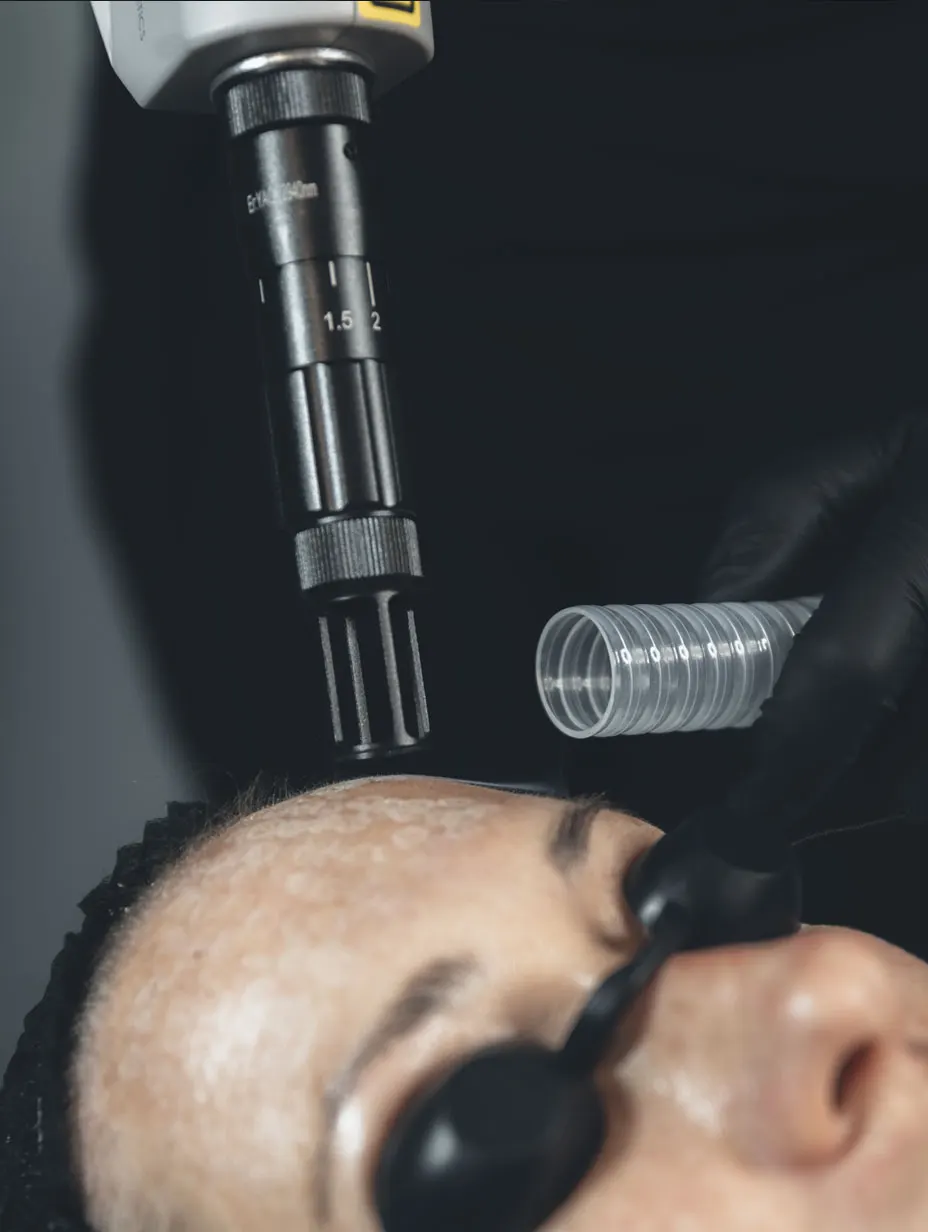
Erbium resurfacing is an ablative laser treatment, meaning it removes a measured layer of skin. The Erbium laser, Er:YAG, emits light at a wavelength strongly absorbed by water, and because skin cells are mostly water, each pass vaporizes a very thin layer of tissue while spreading little heat into the skin around it.
That precision is its main advantage. Compared with the carbon dioxide laser, the other classic resurfacing laser, Erbium generally means less heat injury, less lingering redness and a shorter recovery at a similar depth, though CO2 is usually credited with more tightening. The body replaces the treated layer with fresh skin and lays down new collagen over the following months, which is where much of the improvement in texture comes from.
What does Erbium resurfacing treat?
Erbium resurfacing is used for fine lines and wrinkles, especially around the eyes and mouth, sun damage and brown spots, shallow acne scars, uneven tone, rough texture and skin that looks dull. It works on the surface and the layer just beneath it, so it is strongest on problems that live there.
It is not a tool for lost volume, deep folds or heavy sagging. Those respond better to fillers or threads, and early laxity often does better with RF microneedling. Melasma calls for caution, because heat can make it worse; for pigment and uneven tone we talk through the right approach at your consultation before any laser is chosen.
What happens during an Erbium laser appointment?
Your free consultation comes first. We look at your skin, ask about your history, your sun exposure and how much downtime you can take, and decide on the depth and number of passes. Some people are asked to start a skin-care routine beforehand, and anyone with a history of cold sores is usually given an antiviral, since resurfacing can trigger an outbreak.
On the day, the skin is cleansed and numbed and you wear protective eye shields. The laser is passed across the area in a set pattern, and most people feel heat with a snapping or prickling sensation. Time in the chair depends on the area and depth, from well under an hour for part of the face to longer for the full face and neck.
Aftercare matters most. The skin will be red and may feel sunburned, then it flakes or peels as new skin forms underneath. Keep it moist with the ointment or balm your provider recommends, never pick at it, sleep with your head raised the first night if you swell, and stay strictly out of the sun.
How long is the downtime after Erbium resurfacing?
Downtime depends on how deep the treatment goes. A light pass may mean two to four days of redness and flaking. Deeper resurfacing can mean a week or more before the skin looks ready for company, with pinkness fading over several weeks after that. We plan the depth around your calendar so the recovery holds no surprises.
Most people see smoother, brighter skin once the peeling finishes, and texture keeps improving for a few months as collagen rebuilds. Lighter treatments are often repeated in a series, while a deeper one may be a single session. Results vary with skin type, depth and how carefully the aftercare is followed, and daily sunscreen protects what you gain.
Who should not have Erbium laser resurfacing?
Resurfacing sets off a real wound-healing process, so we screen carefully. We do not treat during pregnancy or breastfeeding, over an active infection or cold sore, on recently tanned skin, or within several months of isotretinoin. Tell us about keloid scarring, vitiligo, autoimmune conditions, diabetes or anything that slows healing, along with any past laser treatment or peel.
Deeper skin tones can be treated with care, but they carry a higher risk of temporary darkening after any ablative laser, so settings and preparation are more conservative and a test spot may come first. If resurfacing is not a good match for your skin, we suggest an alternative instead of pressing ahead. Your provider completes a full review of your history before the first treatment.