
TL;DR
Our laser treatments each do one job. Laser hair removal reduces pigmented hair over a series of sessions. Erbium resurfacing removes thin layers of damaged surface skin for fine lines, sun damage, scars and texture. Q-switched Nd:YAG tattoo removal breaks up ink so the body can clear it, over five to ten sessions for most tattoos. Skin tone, recent sun and some medicines matter to every laser, so each plan starts with a free consultation at Speakeasy Aesthetics.
Which laser treatment do I need?
The right laser depends on what you want to change, because each one targets something different. To reduce unwanted hair, laser hair removal aims at the pigment in the hair. To improve fine lines, sun damage, shallow scars or rough texture, Erbium resurfacing removes thin layers of damaged skin. To fade ink, tattoo removal shatters pigment particles so your body can clear them. If more than one applies, each is planned on its own schedule, with time between treatments on the same area.
What laser does Speakeasy Aesthetics use?
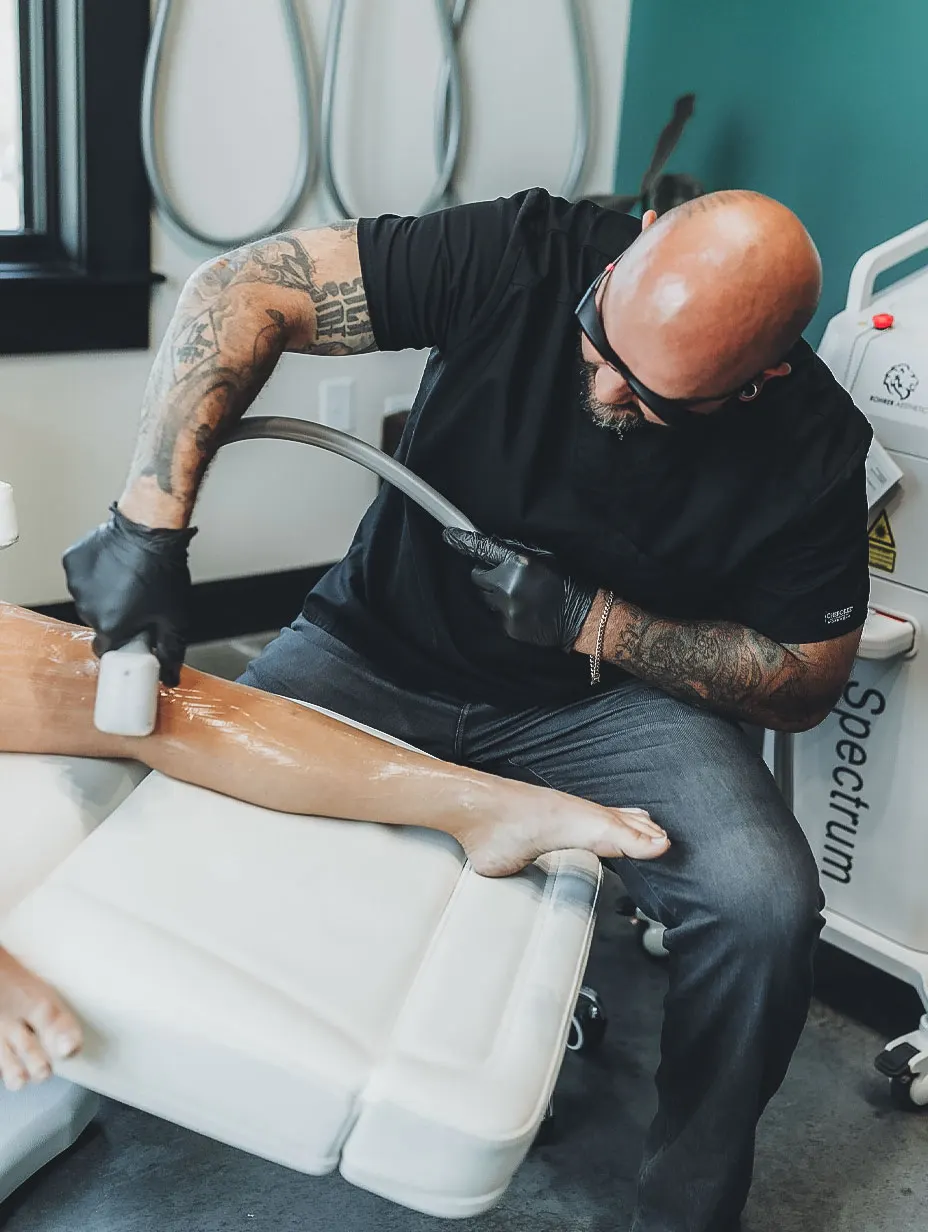
The studio uses a Rohrer Aesthetics Spectrum laser platform. For tattoos the studio works with a Q-switched Nd:YAG, whose very brief pulses crack ink apart, and for resurfacing with an Erbium (Er:YAG) wavelength that water in the skin soaks up.
You will often meet Joey Ornelas, our co-owner, at the lasers. Settings are chosen for each person and each area at every visit, and they are adjusted as your skin, your hair or your tattoo responds over the course of a series.
Does skin tone matter for laser treatment?
Skin tone matters for every laser, because the skin’s own pigment can absorb energy meant for hair or ink. Deeper skin tones can be treated with settings chosen for them, usually gentler and slower, and a test spot may come first. Fresh sun exposure raises the risk of burns and pigment changes for anyone, so plan sessions for stretches when you can keep the area covered. We assess your skin type at the consultation before any laser touches it.
How do laser treatments compare with RF microneedling?
Lasers and radiofrequency both use energy to change the skin, but they deliver it differently. Erbium resurfacing removes the surface, which suits sun damage, pigment and fine texture, and it brings visible peeling. Pixel8-RF microneedling sends heat beneath the surface through fine needles and leaves the top layer largely intact, which suits laxity, pores and scars with a shorter recovery across most skin tones. Some plans use both, spaced months apart, with RF microneedling building firmness first and a light Erbium pass refining the surface later.
What should I know before booking a laser session?
Every laser plan starts with a free consultation. Bring a list of your medicines, since some make the skin more sensitive to light, and mention cold sores, keloids, recent isotretinoin, pregnancy and any recent tan. For hair removal, shave and stop waxing; for tattoo removal, expect a course measured in months; for resurfacing, set aside the downtime. Outcomes differ from one person to the next, and we give you a realistic picture of yours before the first session.