
TL;DR
Laser hair removal uses light absorbed by the pigment in the hair to heat and disable the follicle. It is hair reduction over time: most people need a series of sessions spaced weeks apart, then occasional touch-ups. It works on pigmented hair, so blond, gray, white and red hair respond poorly, and your skin tone guides the settings. We treat the face, underarms, bikini and Brazilian areas, legs, back, chest, arms and hands. Consultations at Speakeasy Aesthetics are free and cover your hair and skin type.
- Treats
- Face, underarms, bikini, legs, back, chest, arms
- Series
- Often 6–8 sessions, weeks apart
- Works on
- Dark, pigmented hair
- Downtime
- Brief redness for most people
- Before
- Shave the day before; no waxing
How does laser hair removal work?
Laser hair removal targets melanin, the pigment in the hair shaft. The light is absorbed by that pigment and turned into heat, which travels down to the follicle and damages the structures that grow new hair. The surrounding skin is protected by cooling and by settings chosen to match it.
Hair grows in cycles, and the laser only affects follicles in their active growth phase at the moment of treatment. That is why one session is never enough and why sessions are spaced weeks apart: each visit catches a new group of follicles as they enter that phase. Over a series, the hair that comes back tends to be finer, lighter and sparser. The result is a long-term reduction; some hairs may regrow, and touch-ups keep them in check.
Which areas can be treated?
Almost any area with unwanted dark hair can be treated. The most common requests are listed below. Ingrown hairs and razor bumps along the bikini line, the neck or the beard area often settle as the hair thins, which is one of the main reasons people choose laser over shaving and waxing.
Areas close to the eye, such as the eyebrows, are generally not treated with a hair removal laser because of the risk to the eye itself. Tattooed skin is also avoided, since the laser can react with the ink; fading a tattoo is the work of laser tattoo removal, which uses a different kind of laser. If you have an area in mind that is not listed, ask at your consultation.
- Upper lip, chin and sideburns
- Underarms
- Bikini line and Brazilian
- Legs
- Back and chest
- Arms and hands
Does laser hair removal work on all hair colors and skin tones?
Laser hair removal works best on dark, pigmented hair, because pigment is what the laser targets. White, gray and light blond hair carry little or no pigment and respond poorly, and red hair is often stubborn as well. If your unwanted hair is very light, we will tell you so at the consultation.
Skin tone matters just as much, because skin carries pigment too. Deeper skin tones can be treated, but they call for settings chosen for darker skin, usually gentler and slower, so the heat stays in the hair. A recent tan raises the risk of burns and pigment changes for everyone. The consultation covers both your hair and your skin, and a test patch may be done before the first full session.
What happens at a laser hair removal appointment?
The first step is a free consultation to look at your hair and skin, ask about medicines and sun exposure, and plan the areas. Before each session, shave the area the day before or that morning. Skip waxing, plucking and threading for several weeks so the root is there for the laser to find, and arrive with clean skin and no lotion or deodorant on the area.
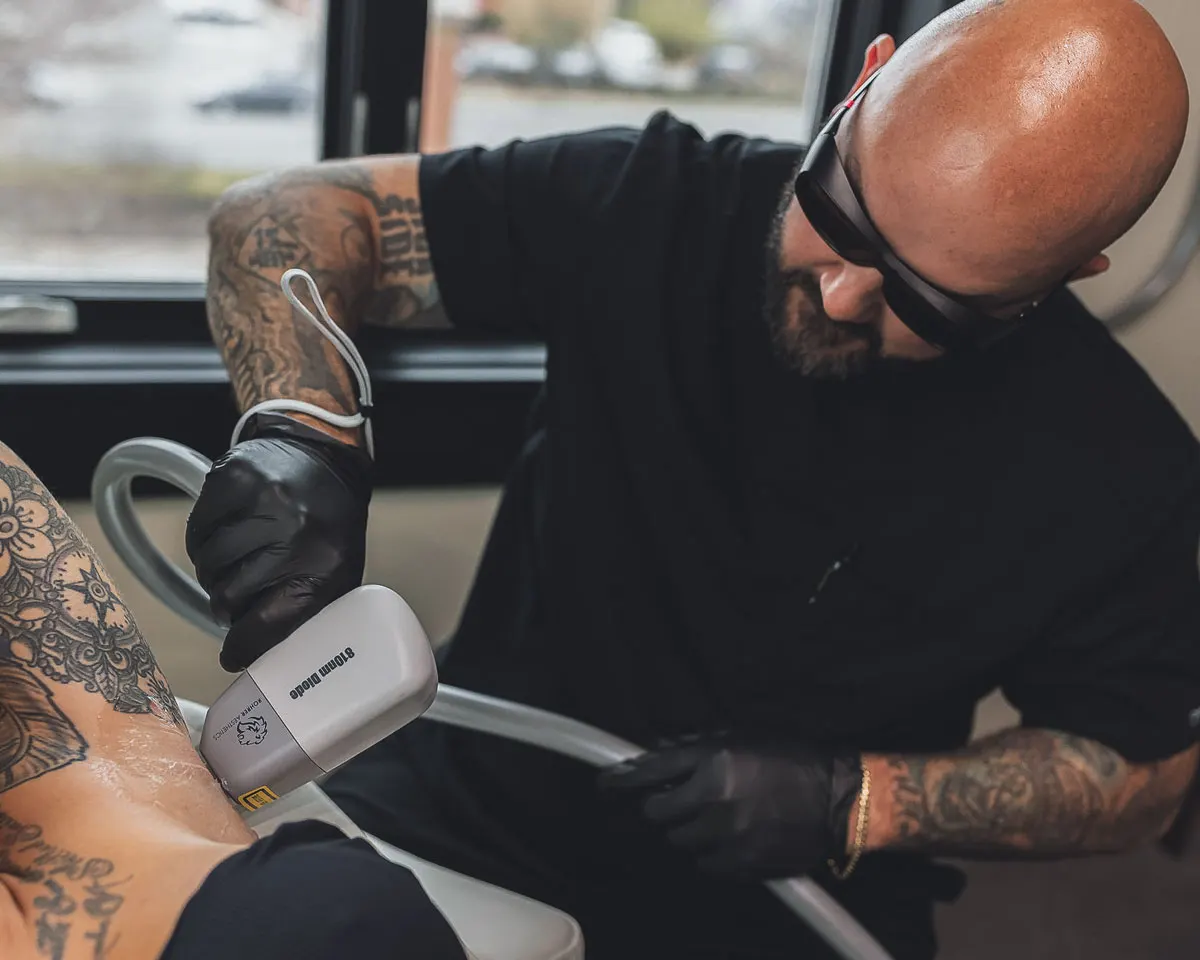
On the day, everyone in the room wears protective eyewear. The laser moves over the area in overlapping pulses, with cooling to protect the skin, and most people describe a snap like a rubber band with a flash of heat. A small area such as the upper lip takes minutes; legs or a back take longer. Joey Ornelas, our co-owner, performs laser hair removal at the studio.
Expect redness and small bumps around the follicles for a few hours to a day. Treated hairs shed over the next week or two, which can look like regrowth. Avoid sun, hot tubs and hard workouts for a day or two, and wear sunscreen on exposed areas between sessions.
How many sessions does laser hair removal take?
Most people need six to eight sessions for a noticeable, lasting reduction. Facial hair comes back sooner and is usually treated about four to six weeks apart, while body areas are often spaced six to eight weeks or more. Hormonally driven hair, such as on the chin, can take extra sessions and ongoing touch-ups.
Results vary with hair color and thickness, hormones and the area treated. After the series, most people return for an occasional maintenance session, often once or twice a year, as dormant follicles become active. We set out a realistic schedule for you at the consultation, and adjust it as we see how your hair responds.
Who should not have laser hair removal?
We wait during pregnancy, and we hold off over a fresh tan or sunburn, on skin with an infection, cold sore or open wound, and for anyone who has taken isotretinoin recently. Some medicines and supplements make the skin more sensitive to light, including certain antibiotics, so bring a list to the consultation.
Tell us about keloid scarring, vitiligo, or hormonal conditions such as polycystic ovary syndrome, which can affect how hair responds and how many sessions you may need. Your provider goes through all of it before your first session, and will tell you plainly if another method would suit you better.