
TL;DR
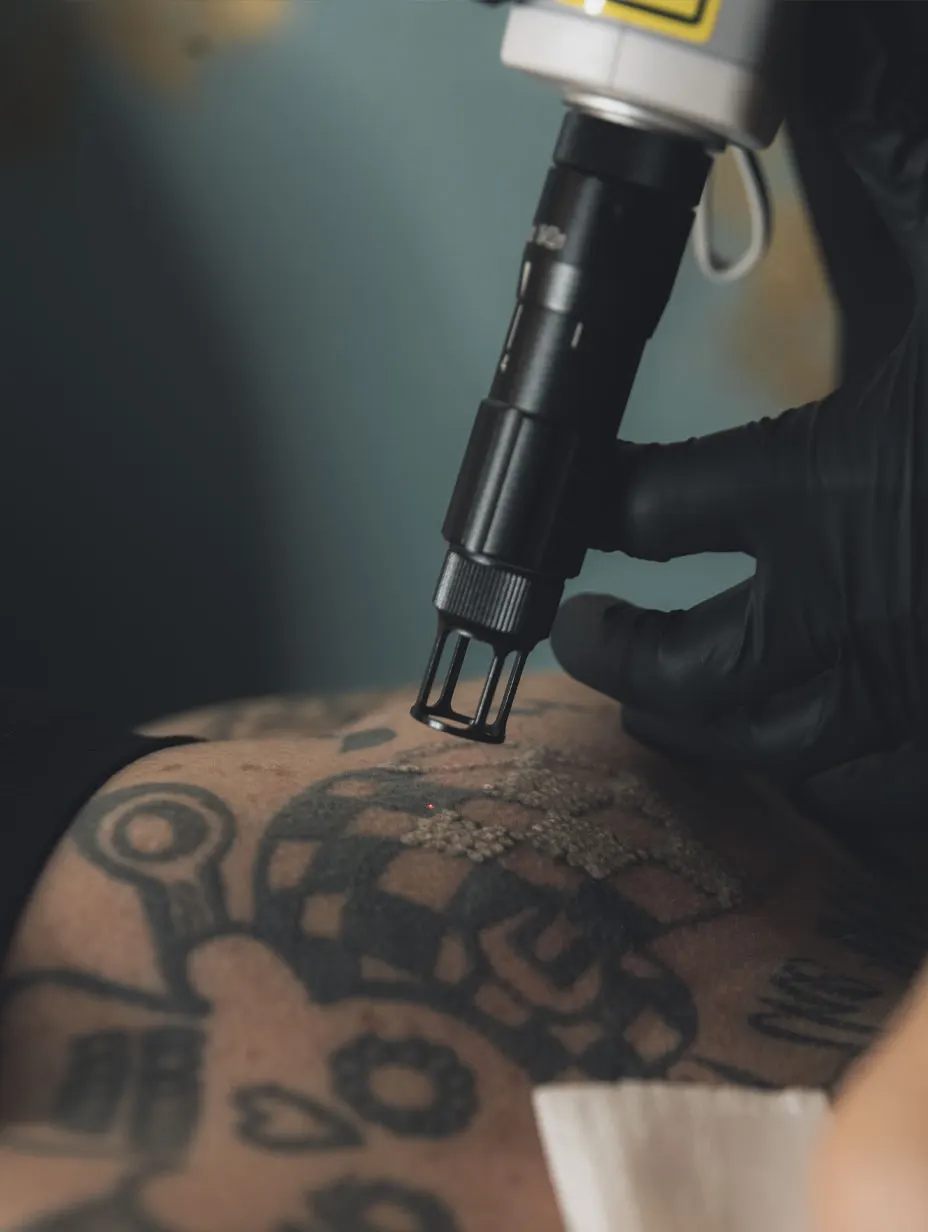
We remove tattoos with a Q-switched Nd:YAG laser, which fires extremely short pulses that shatter ink particles in the skin so the body can clear them. Sessions usually take under 30 minutes, and most tattoos fade over five to ten sessions spaced weeks apart. Black and dark ink respond best; some colors are slower. Results vary with the ink, its depth and age, the location and your skin. The consultation is free, and it is where we look at your tattoo and give you an honest estimate.
- Laser
- Q-switched Nd:YAG
- Session
- Usually under 30 minutes
- Sessions
- Most tattoos fade over 5–10
- Spacing
- About 6–8 weeks apart
- Consultation
- Free
How does laser tattoo removal work?
Tattoo ink sits in the dermis as particles too large for the body to clear on its own. A Q-switched Nd:YAG laser fires pulses lasting a few billionths of a second, short enough to shatter those particles without heating much of the skin around them. The immune system then carries the smaller fragments away over the following weeks, and the tattoo lightens.
That is why removal is gradual. Each session breaks up more of the ink, and the body needs time between visits to clear what was loosened. Some people want the tattoo gone entirely; others want it light enough for an artist to cover with new work. Tattoo removal is part of the laser work Joey Ornelas, our co-owner, does at the studio, alongside our other laser treatments.
Can laser remove colored tattoos?
Black and dark blue ink respond best to the Nd:YAG laser. Colored inks vary: some fade well, others slowly or only partly, and greens and pale blues are usually the hardest. Most tattoos are a mix, so a single piece can fade unevenly, with the dark linework clearing before the color.
Some inks, especially white, flesh-toned and certain cosmetic tattoo pigments, can darken when the laser hits them because of the metal compounds they contain. A small test spot is the safe first step for any ink we have reason to be cautious about. At the consultation we look at your colors and tell you plainly how each is likely to respond.
How many sessions does tattoo removal take?
Most tattoos fade over five to ten sessions spaced about six to eight weeks apart, so a full course often runs a year or longer. Some fade faster and some need more. The number depends on the ink’s colors and density, how deep it sits, how old it is, where it is on the body and how efficiently your immune system clears it.
Amateur tattoos, with less ink placed less evenly, often fade faster than dense professional work. Tattoos on the hands, feet and ankles, farther from the heart, tend to clear more slowly. Moving sessions closer together does not speed things up and raises the risk of scarring, so we keep the spacing. Results vary, and you will get an estimated range when you book a free consultation.
What is a tattoo removal session like?
It starts with a free consultation. We look at the tattoo, its colors and your skin, and ask about your health and medicines. The sessions themselves are quick, usually under 30 minutes and often only a few minutes for a small tattoo. Everyone in the room wears protective eyewear.
Numbing cream can be applied beforehand. Each pulse feels like a sharp snap, often compared to a rubber band against the skin, and the treated ink turns white for several minutes right after. Expect redness and swelling, and sometimes pinpoint bleeding or blistering. Over the following days the area may scab as it heals.
Aftercare keeps the risk of scarring low. Keep the area clean and covered as directed, apply a thin layer of ointment, let blisters and scabs heal on their own, stay out of pools and hot tubs until the skin has closed, and keep the area out of the sun between sessions.
Who should wait before having a tattoo removed?
We do not treat during pregnancy or breastfeeding, over a fresh tan or sunburn, or on skin with an infection or rash. Tell us if you scar easily or have a history of keloids, if you have taken isotretinoin recently, or if you take medicines that increase light sensitivity. A tattoo should be fully healed, generally at least a few months old, before removal begins.
Deeper skin tones can be treated, with settings chosen to protect the skin’s own pigment, and temporary lightening or darkening of the treated skin is a known risk for everyone. If you are torn between removal and a cover-up, fading the tattoo for new work is a common middle path. Your provider reviews your history before the first session.